.png?width=350&height=140&name=Khant%20Nay%20Chi%20(1).png)
 By
By
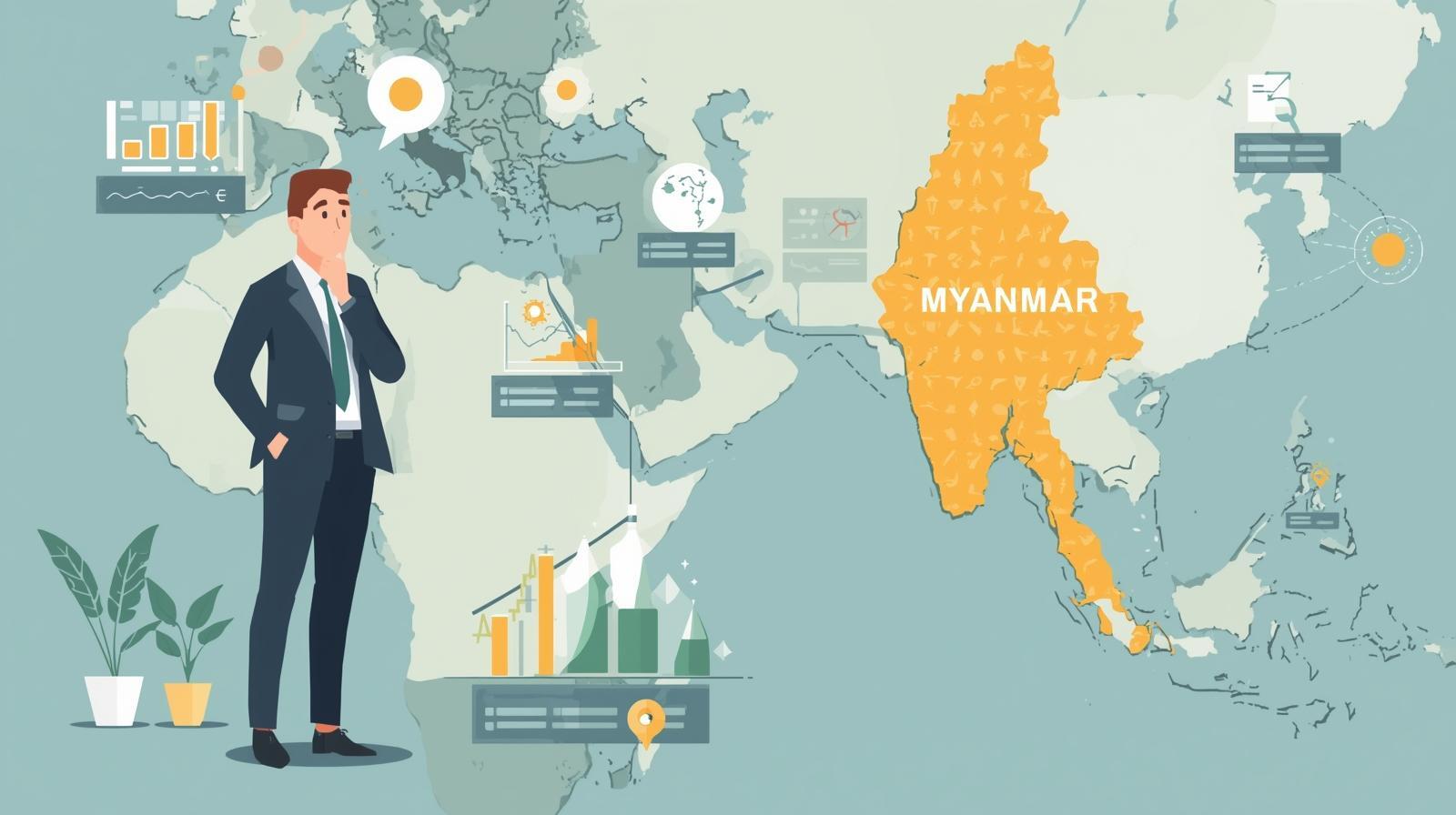
.png?width=1600&height=896&name=Untitled%20design%20(2).png) Understanding the marketing age of Myanmar means understanding how a country can jump from almost no modern media to a mobile‑first, social‑driven marketplace in just a few years.
Understanding the marketing age of Myanmar means understanding how a country can jump from almost no modern media to a mobile‑first, social‑driven marketplace in just a few years.
This shift affects how brands communicate, how consumers discover products, and how careers in marketing are built.
For marketing students, young professionals, and business owners, knowing this evolution is essential for designing campaigns that actually work in Myanmar’s unique context.
This blog is written for:
-
Marketing and business students in Myanmar
-
Junior marketers and agency staff
-
Local SMEs and entrepreneurs planning campaigns in Myanmar
It will explain what the “marketing age of Myanmar” is, why it matters, and how to navigate it in practice.
You will see how the country moved from restricted media and word‑of‑mouth to a digital, mobile‑native era, why that shift is important for your personal and professional goals, and concrete steps to design better strategies in this environment.
What is the “marketing age of Myanmar”?
The “marketing age of Myanmar” describes the rapid evolution of the country’s media, technology, and consumer behavior—from a largely offline, tightly controlled environment to a mixed landscape where traditional channels coexist with fast‑growing digital platforms.
For decades, advertising was limited, state‑influenced, and focused on print, radio, and basic outdoor; many brands relied on relationships, local networks, and community reputation instead of modern campaigns.
A good analogy is “skipping steps on a staircase.”
Many countries slowly climbed from print to TV, then to desktop internet, and only later to smartphones and social media.
Myanmar jumped several steps: once SIM card prices dropped and telecoms opened up, people went straight to smartphones, Facebook, TikTok, and messaging apps as their main way to access information and brands.
This created a marketing environment where a street‑level billboard, a village event, and a TikTok video might all be part of the same campaign.
Why this important? Because it shapes:
-
How you should plan campaigns (which channels matter most)
-
What skills you need (from copywriting in Burmese to social media optimization)
-
Where the biggest career and business opportunities lie in the next five to ten years 6wresearch+2
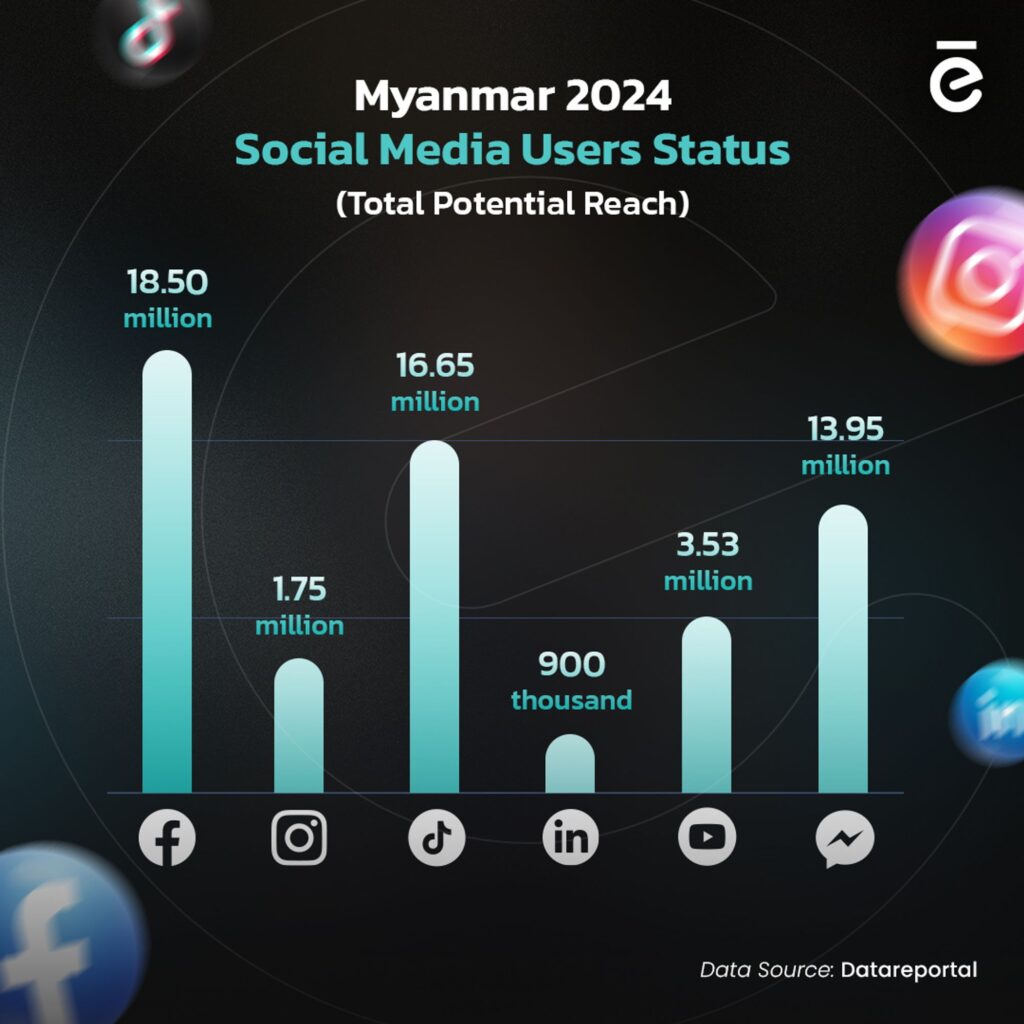
Myanmar Social Media User Data 2024 (https://datareportal.com/reports/digital-2025-myanmar)
Why this topic matters
Personal and career relevance
For students and junior marketers, Myanmar’s marketing age is a chance to grow with the market.
The digital sector is expanding alongside traditional media, so there is demand for people who understand both worlds: event marketing and social media, consumer psychology and data.
Reports on Myanmar’s digital market highlight rapid growth in social media use, e‑commerce, and digital payments, but also a shortage of advanced digital skills and strategic expertise.
That skills gap is your opportunity to specialize in areas like content strategy, SEO, analytics, or campaign localization.
Mobile and internet penetration have risen sharply compared with a decade ago, transforming how people search for information, shop, and interact with brands.
Data Report estimates tens of millions of mobile connections and strong social media usage, meaning that almost any career in marketing, tourism, retail, or services is now affected by digital touchpoints.
If you understand how these changes fit together, you can design more realistic, effective plans rather than copying strategies from very different markets.
Business and industry impact
For businesses, the marketing age of Myanmar matters because the stakes are high.
Analysts describe Myanmar as a “frontier market”—high risk but also high potential.
Consumers are relatively young and open to new brands, yet their trust is heavily influenced by culture, religion, and community reputation.
International and local sources point out that brands that respect cultural norms and show they are truly helping Myanmar tend to gain stronger loyalty.
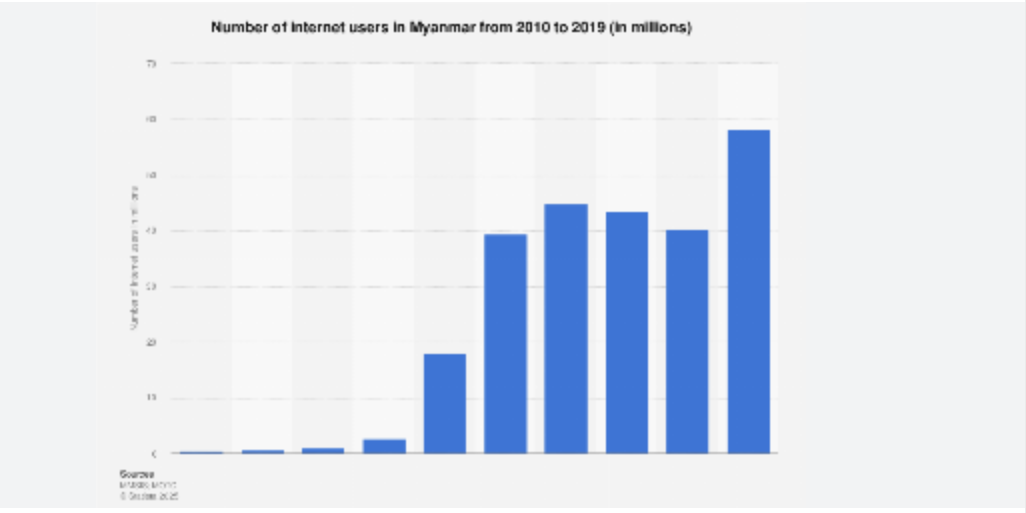
Numbers of Internet Users in Myanmar From 2010 to 2019 (in millions)
Digitally, the market is growing despite political and economic challenges.
A recent digital marketing report notes that Myanmar’s digital advertising market is projected to reach hundreds of millions of US dollars in the mid‑2020s, driven by social media ads, video, and mobile formats.
At the same time, research on SEO and online behavior shows that search visibility and localized content are becoming central to how Burmese consumers find products and services.
Understanding this context helps companies allocate budgets wisely instead of over‑spending in channels their audience barely uses.
How Myanmar’s marketing age developed
From restricted media to telecom boom
Historically, Myanmar’s media landscape was tightly controlled, and private advertising was limited.
Newspapers were state‑aligned, broadcast media had little variety, and billboards or basic print ads were among the few ways brands could reach people at scale.
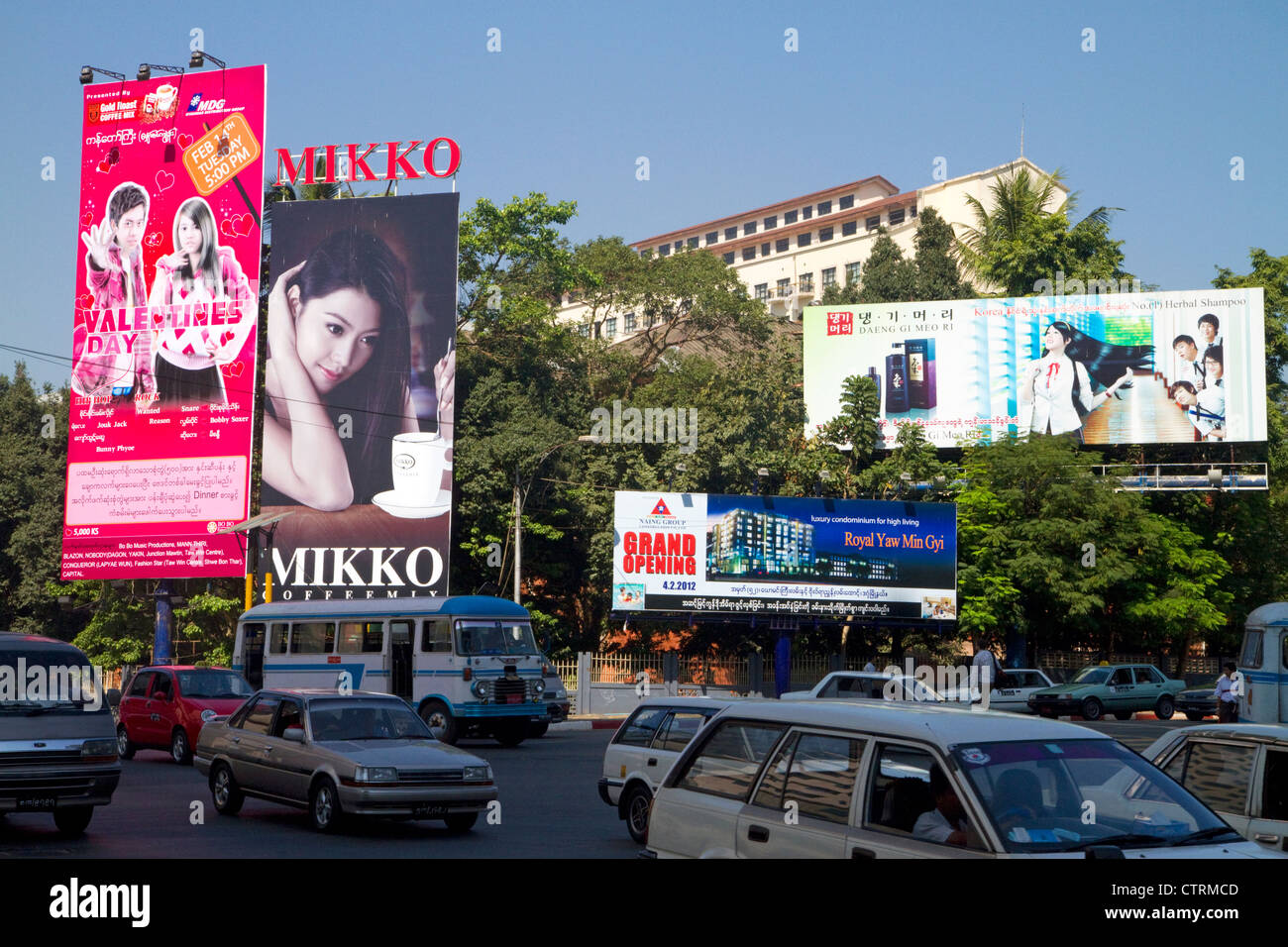
Billbords Advertising in downtown area
Case stories from local agencies show how early billboard campaigns for global brands in the 1990s were pioneering, yet still constrained by sanctions and regulations.
Things changed dramatically when telecom liberalization lowered SIM prices and allowed foreign operators to enter.
Within a few years, SIM cards that once cost thousands of dollars became affordable to ordinary citizens, leading to one of the fastest mobile adoption curves in the world.
People who had never owned a landline or desktop computer suddenly had internet‑enabled smartphones, making Myanmar a “mobile‑native” market.
This leap reshaped marketing: Facebook, TikTok, and messaging apps became primary spaces for news, entertainment, and brand communication.
The current hybrid landscape
Today, Myanmar’s marketing age is a hybrid of:
-
Traditional channels: print, radio, TV, billboards, in‑store promotions, and event marketing, still important especially outside major cities.
-
Digital channels: social media ads, influencer content, SEO, e‑commerce, and mobile apps, concentrated in more connected urban segments but spreading gradually.
Campaign Asia notes that Myanmar consumers are significantly more likely than the global average to interact with mobile app advertising, showing how central mobile has become.
At the same time, strategy guides for Myanmar emphasize that success requires local partners who understand language, culture, and the emotional tone that resonates with different ethnic and religious communities.
For marketers, this means you cannot think in “either/or” terms. A strong plan often combines:
-
Localized copy in Burmese (and sometimes ethnic languages)
-
Offline events or sponsorships linked to festivals
-
Social media and messaging‑based engagement
-
Search‑optimized content and simple, mobile‑friendly websites
How to navigate and benefit from the marketing age of Myanmar?
1. Start with audience research and cultural understanding
Understanding Myanmar’s marketing age begins with accepting that culture and context come first.
Articles on marketing in Myanmar stress that a plan must be built with locals who know the language, norms, and sensitivities; missteps can quickly damage reputation.
Actionable steps:
-
Talk to local consumers in your target segment (youth, parents, SMEs, etc.) and ask where they spend time: which apps, which offline spaces, which media.
-
Map cultural and religious events relevant to your audience (e.g., Thingyan, pagoda festivals) and consider how your brand can add value respectfully during those times.
-
Involve local copywriters or cultural advisors, especially if you are mixing Burmese and English in campaigns.
2. Combine traditional and digital channels
Because Myanmar’s marketing environment is hybrid, you need integrated campaigns.
Reports on media and advertising in Myanmar show that traditional media still play a big role in awareness, while digital channels help with engagement and conversion.
-
Use outdoor or point‑of‑sale materials to drive traffic to digital channels (QR codes that link to Facebook pages, promotions redeemable via messaging apps).
-
For local SMEs, combine street‑level visibility (shop signage, local event sponsorship) with consistent posting on the platforms your customers use most, often Facebook and messaging apps.
-
Track which offline activities create spikes in online engagement, using simple metrics like page likes, message volume, or website visits.
3. Build basic digital foundations (SEO, social, mobile)
Recent SEO studies highlight that Myanmar’s online ecosystem is maturing: more searches, more competition, and growing importance of optimization for Burmese and local search intent.
Digital market analyses also underline the rise of e‑commerce, mobile payments, and social media advertising.
Actionable steps:
-
Ensure your website (even a simple one) is mobile‑friendly, fast, and uses clear Burmese keywords that reflect how people actually search.
-
Optimize at least one social platform deeply instead of doing many poorly; in Myanmar, Facebook and TikTok often dominate, but this can vary by segment.
-
For service or tourism businesses, keep business listings up to date and encourage satisfied customers to share reviews or posts, since word‑of‑mouth still carries weight.
4. Use data, even if it is basic
One challenge in Myanmar is limited access to advanced analytics tools and fragmented data, especially when connections are unstable.
However, even simple metrics can guide better decisions. Reports emphasize tracking basic indicators like engagement, click‑throughs, and growth in followers or leads for digital campaigns .
-
Decide 3–5 key metrics for each campaign (e.g., messages received, inquiries, coupon redemptions, website visits from Myanmar) and review them weekly.
-
Use free or low‑cost tools (platform insights, basic web analytics) to see which content formats and posting times work best.
-
Run small A/B tests: two versions of an ad or post with different visuals or headlines; keep the one that performs better and learn what your audience prefers.
5. Plan for constraints: infrastructure, regulation, and risk
Sources point out that Myanmar’s digital market faces real obstacles: uneven connectivity, electricity issues, regulatory uncertainty, and political instability.
These factors affect when people can go online, which platforms are accessible, and how comfortable brands feel about investing. medialandscapes+2
Actionable steps:
-
Prepare “backup” communication plans that rely on both offline and online channels in case major platforms are restricted or connectivity drops. datareportal+1
-
Avoid sensitive political or religious topics unless you work with deep local expertise and clear guidelines; brand opportunity reports warn that cultural missteps can quickly become crises. sciencedirect+2
-
Focus on long‑term trust: transparent communication, CSR activities that genuinely help communities, and consistent behavior over time. brandinginasia+1
Common mistakes to avoid
-
Copy‑pasting strategies from other countries
Using campaigns designed for Thailand, Singapore, or Western markets without adapting them to Myanmar’s language, income levels, and cultural norms often leads to weak results or backlash.Myanmar consumers respond differently to humor, prestige, and social issues; ignoring this can make a brand appear arrogant or insensitive.
-
Over‑focusing on “digital only” and ignoring offline realities
Some brands, excited by digital, place almost all their budget into online ads, forgetting that a large share of the population still relies on in‑person interactions, local shops, and offline media.Without physical visibility or community presence, campaigns may look impressive in dashboards but fail to translate into actual sales or loyalty.
-
Neglecting Burmese and local language content
English‑only campaigns can miss most of the market.Agencies working in Myanmar note that high‑quality Burmese copy and sometimes bilingual content are crucial for clarity and emotional impact.
Poor translations or generic phrasing feel inauthentic and can damage perception of a brand’s seriousness.
-
Ignoring measurement and learning
Because data can be messy, some organizations do not track results at all.This means they repeat mistakes and cannot prove value internally.
Even basic tracking, as highlighted in market and SEO reports, can reveal valuable patterns over time.
Additional tips
-
Build both strategic and practical skills: Learn classic marketing frameworks, but also practice running real social campaigns, writing Burmese and English copy, and analyzing basic data from live projects.
-
Follow credible sources regularly: Reports from DataReportal, specialized SEO blogs, and regional marketing analyses provide updated numbers and case insights specific to Myanmar and Southeast Asia.
-
Network locally: Join local marketing groups, events, or online communities. Many practical lessons about the marketing age of Myanmar come from peers sharing what actually worked or failed for them.
-
Think long‑term: The country’s situation can be volatile, but digital penetration and marketing sophistication are likely to continue growing in the long run. Skills you build now in understanding Myanmar’s hybrid market will stay valuable.
The marketing age of Myanmar is not just a time period; it is a learning environment for anyone involved in business, communication, or development.
In a single generation, Myanmar has moved from limited, state‑dominated media to a dynamic mix of roadside billboards, festival events, Facebook pages, TikTok clips, SEO‑optimized sites, and mobile payments.
This creates complexity, but it also creates space for thoughtful, well‑prepared marketers to make a real difference.
For your personal and professional growth, the key is to combine cultural understanding, integrated channel planning, basic digital foundations, and a willingness to test and learn.
By avoiding common mistakes and following the practical steps outlined above, you can design campaigns, projects, or research that truly fit Myanmar’s reality and contribute positively to how brands and communities interact in this changing marketing age.